Managed vs Self-Hosted Dependency Mirrors: Artifactory, Nexus, and StableBuild Compared
Managed vs Self-Hosted Dependency Mirrors: Artifactory, Nexus, and StableBuild Compared
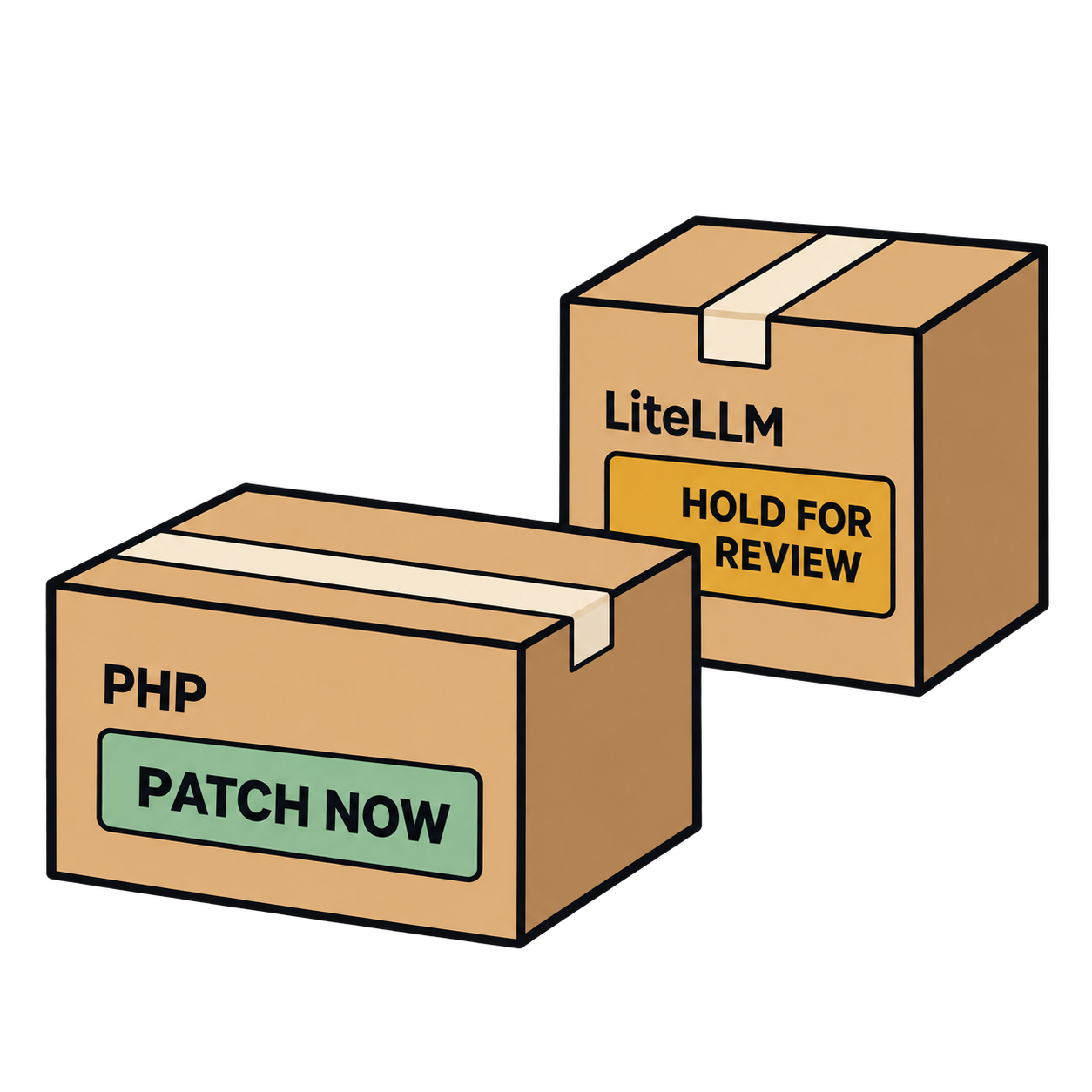
When an engineering team needs more control over external dependencies, it often ends up comparing products that look similar on a feature list but serve different purposes.
JFrog Artifactory and Sonatype Nexus Repository are broad artifact repository managers. They can host packages and container images published by your organization, proxy external repositories, manage permissions, combine repositories behind shared endpoints, and support wider artifact-governance workflows.
StableBuild is deliberately narrower. We focus on preserving the external inputs your builds retrieve so an upstream update, deletion, outage, or registry cleanup doesn't unexpectedly change or break an older build.
A useful managed vs. self-hosted mirror comparison therefore needs to look beyond where the software runs. It should also compare what each product is intended to do, how much configuration it requires, who operates it, how retention works, what SBOM capabilities are included, and what the full solution is likely to cost.
Compare the job before comparing the deployment model
Artifactory and Nexus are both available as managed services and as software operated inside an organization’s own infrastructure. StableBuild provides a managed service and can also be deployed in a customer’s own infrastructure as an Enterprise option.
That means deployment location alone does not determine the answer.
The first decision is whether you need a general artifact repository manager for internal publishing and external dependency access, or a more focused dependency mirror designed to keep public build inputs available and stable.
This is not a complete licensing or feature matrix. Package formats, security capabilities, high-availability options, support levels, traffic, storage, and additional products can all change the final price. Always confirm current pricing with the provider before deciding. Source: [JFrog pricing page]
Artifactory and Nexus offer more breadth, which also creates more setup work
Artifactory uses remote repositories as a dependency proxy. When a client requests an artifact that is not already cached, Artifactory retrieves it from the upstream repository and stores a local copy. Artifactory also supports local repositories for artifacts your organization publishes and virtual repositories that combine several sources behind one endpoint.JFrog Docs
Nexus uses a similar model. Proxy repositories retrieve and cache external components, hosted repositories store artifacts the organization publishes, and group repositories expose several sources through one URL.Sonatype Help
These capabilities matter when an organization wants one platform for internal artifacts, public dependencies, permissions, repository grouping, release workflows, and multiple package ecosystems.
They also create more decisions.
Before the first production build uses the service, someone may need to choose a deployment model, create the required repository types, configure storage, set access controls, define cleanup policies, connect upstream credentials, plan backups, and decide how high availability will work.
A managed Artifactory or Nexus service removes much of the infrastructure work, but it does not remove the repository-design work. Your team still needs to decide which repositories exist, which upstreams they use, how packages are grouped, who can publish, and what to retain.
StableBuild is simpler because it solves a narrower problem
For supported public dependencies, StableBuild does not require a team to design a complete repository platform.
For a Docker Hub image, the change can be as small as prefixing the original image with the StableBuild mirror domain:
FROM your-domain.dockermirror.stablebuild.com/ubuntu:24.04For Python, point pip at a StableBuild index:
pip install \
  -i https://your-domain.pypimirror.stablebuild.com/2026-10-01/ \
  -r requirements.txt
The build tools remain the same. Docker still uses a Docker-compatible registry, and pip still uses a compatible Python package index.
For supported sources, there are no local, remote, virtual, hosted, proxy, or group repositories to design. There is no storage backend to provision for the managed service and no cleanup policy to invent before the first build can use it.
That is why StableBuild can be the simpler option when the actual requirement is:
Keep the public dependencies our builds already use available and unchanged.
The narrower scope is also an important commercial difference. A team doesn't need to purchase and operate a full artifact-management platform just to preserve external dependencies. StableBuild’s managed plans start at $199 per month, and the Community tier lets you test the workflow before committing to a paid plan.StableBuild
Compare total cost, not only the subscription price
Artifactory, Nexus, and StableBuild pricing are structured differently, so a direct comparison requires some care.
At the time of writing, JFrog’s SaaS Pro plan is currently available for $50 per month as a limited-time offer, compared with its usual price of $150 per month. The plan includes 25 GB of usage, with additional storage and transfer charged separately. JFrog’s usage pricing ranges from approximately $0.75 to $1.25 per GB, depending on volume. Its self-managed Pro X plan starts at $27,000 per year.
Sonatype provides a free Community Edition free; Pro and Pro+ use usage-based pricing-based pricing for storage and egress.
StableBuild uses a different pricing model. At the lowest Team tier, 1 TB of storage is included, with additional storage priced at $0.05 per GB. The same tier includes 10 TB of transfer, with additional transfer priced at $0.10 per GB.
That difference matters when comparing real monthly costs. JFrog’s $50 promotional base price can look cheaper at first, but storage and transfer can increase the total substantially. For example, around 1 TB of usage on JFrog Pro can add roughly $1,000 or more in usage charges, while StableBuild includes 1 TB of storage in its Team tier.
The comparison is therefore more useful when based on expected storage and transfer rather than the subscription price alone. For teams using a meaningful amount of dependency storage or bandwidth, StableBuild can become the lower-cost option despite having a higher headline base price.
Retention determines whether an older build still works
Consider a Dockerfile that uses an external image:
FROM vendor/image:1.4.2The image passes through a mirror today. Six months later, its publisher deletes it.
Whether the original build still works depends on what the mirror retained, whether cleanup removed any of the required content, and whether the client can retrieve the stored image without a successful connection to the upstream registry.
Downloading something once does not establish those guarantees.
Caching reduces repeated downloads. Retention determines whether the dependency remains available for a later rebuild. Historical dependency resolution adds another requirement: the package manager may need to see the same repository state that was available when the original build was created.
Artifactory retention
Artifactory can support a long-term retention strategy, but administrators need to configure it around the releases the organization intends to maintain.
Remote repository settings control how artifacts are cached, refreshed, and removed. JFrog’s documentation states that leaving the unused-artifact cleanup period empty stores the cached artifact indefinitely. That can support historical rebuilds, provided you also configure storage, metadata, offline behavior, and other cleanup policies appropriately.JFrog Docs
The key point is that retention is a policy the Artifactory operator must design and maintain.
Nexus retention
Nexus administrators can use cache settings and cleanup policies to manage storage growth and decide when to recheck or remove cached components.
Running a Docker registry mirror with Nexus does not, by itself, define how long every image remains available. The team still needs to define which releases it supports and ensure its repository settings, cleanup policies, blob storage, and backup process preserve the necessary inputs.Sonatype Help
StableBuild retention
With StableBuild, our Docker mirror acts as an immutable pull-through cache for supported public registries.
The first pull stores the image associated with the requested tag. Later pulls of that cached tag return the stored image rather than silently following a different image published under the same upstream tag.
Cached Docker images are not automatically overwritten or deleted. A customer can deliberately remove a cached tag from the dashboard when they want the next request to retrieve upstream content again.StableBuild
The difference is that preservation is the default behavior rather than a retention policy each customer needs to build from scratch.
SBOM support is another area where the products serve different jobs
SBOM generation should not be treated as one identical checkbox across all three products.
JFrog provides SBOM generation, import, enrichment, and export through JFrog Xray and related JFrog Security capabilities. Xray can generate CycloneDX SBOMs from resolved source dependencies and can export SBOM data from scanned artifacts and running images. These capabilities depend on the relevant JFrog security products and plan, not the remote-repository proxy alone.JFrog
Sonatype provides broader SBOM generation, ingestion, analysis, storage, VEX, monitoring, and compliance workflows through Sonatype Lifecycle and Sonatype SBOM Manager. Nexus Repository can also store SBOMs alongside artifacts, but SBOM Manager is a separate product intended for full SBOM governance and monitoring.Sonatype Help
StableBuild’s Enterprise SBOM feature uses the dependencies retrieved through StableBuild during a specific build. By adding a build ID to the mirror configuration, teams can record the Docker images, OS packages, Python packages, and files downloaded during that build and export the result in CycloneDX format.
Because the record is created while dependencies are being pulled, it can include build dependencies that do not remain in the final image or binary. This complements finished-artifact scanning rather than replacing every security, vulnerability-management, or compliance workflow.
The distinction follows the broader product comparison. JFrog and Sonatype provide wider software-supply-chain security platforms. StableBuild provides a more focused SBOM tied directly to the dependency-preservation workflow.
Historical rebuilds depend on more than the PyPI index
Artifactory and Nexus can proxy PyPI and host private Python packages.
StableBuild helps preserve a broader set of external build inputs over time, including Python packages, OS packages, Docker images, and files.
For Python packages, StableBuild’s PyPI mirror can point builds at a historical package index rather than the current public index.
For example:
pip install \
  -i https://your-domain.pypimirror.stablebuild.com/2026-10-01/ \
  -r requirements.txt
In this example, the resolver sees the PyPI index associated with 1 October 2026 rather than the current public index.
StableBuild also provides historical OS package mirrors, Docker mirrors, and file mirrors, helping teams preserve more of the external inputs required by an older build. StableBuild also mirrors Deadsnakes, making historical Python versions available when a rebuild depends on an older Python runtime.
For PyPI, we keep full daily copies of the index from 21 September 2023 onward, giving teams a way to rebuild against the package-index state associated with an earlier point in time.
Self-hosting gives control, but it also creates another production service
Self-hosting can be the right choice when an organization needs control over network boundaries, storage location, authentication, deployment architecture, or air-gapped operation.
It also means the repository becomes infrastructure the engineering team must keep working.
For a self-hosted Artifactory or Nexus deployment, the customer is responsible for upgrades, operating-system patches, storage, availability, backups, and recovery. Sonatype’s own cloud comparison shows that these tasks are manual or customer-managed in self-hosted deployments and provider-managed in the cloud service.Sonatype Help
StableBuild can also be deployed in a customer’s own infrastructure as an Enterprise option. This is useful when dependencies cannot pass through a public SaaS service,
If you are interested in deploying StableBuild in your own infrastructure, let us know your needs at support@stablebuild.com.
The important question is not simply whether self-hosting is possible. It is whether your team wants to make an artifact or dependency service part of its ongoing infrastructure responsibilities.
Internal artifact publishing is a separate requirement
A private Docker registry commonly stores images your organization builds and publishes. CI pushes the image there, and deployment systems pull it later.
A dependency mirror retrieves an image published by somebody else and preserves it for your builds.
Artifactory and Nexus support both internal publishing and external proxying. StableBuild’s Docker mirror focuses on supported public upstream registries and does not replace a private registry for your organization’s own container images.
If you need one platform for private packages, internal Docker images, repository promotion, permissions, and external dependencies, Artifactory or Nexus is likely the more complete fit.
If you already have one of those platforms, StableBuild may still be relevant alongside it when the missing requirement is historical dependency preservation rather than internal publishing.
Which option fits which team?
An Artifactory alternative or Nexus alternative should not be evaluated only by counting features.
Artifactory or Nexus is likely the stronger fit when the organization needs:
- internal package and artifact publishing;
- private container-image hosting;
- shared repository endpoints;
- detailed access control;
- repository promotion and governance;
- several internal and external package ecosystems in one platform.
StableBuild is likely the simpler fit when the main requirement is:
- preserving external Docker images, packages, and files;
- preventing upstream tag changes from silently changing builds;
- rebuilding older releases against historical package indexes;
- avoiding the work of operating a general-purpose repository platform;
- generating an SBOM from dependencies retrieved during the build;
- getting started through a small change to existing build configuration.
The narrower product is not always the right product.
But when a team mainly wants its existing builds to keep working, that narrowness is exactly what makes StableBuild easier to set up, easier to operate, and often less expensive than adopting a broader enterprise repository platform.
Start with the failure you are trying to prevent, then choose the product whose default behavior matches that requirement.
For StableBuild, the managed Community tier provides a practical way to test one existing build before deciding whether a paid or Enterprise deployment is appropriate.